Why I wrote this book
Why the safe first step matters
An error message can make a familiar device feel suddenly expensive. A full phone asks you to pay for storage. A television buffers when the Wi-Fi looks fine. A password code fails just when you need to get into an account. The tempting response is to press the next button and hope.
We built this handbook around a different starting point: understand what the warning actually means before changing anything important.
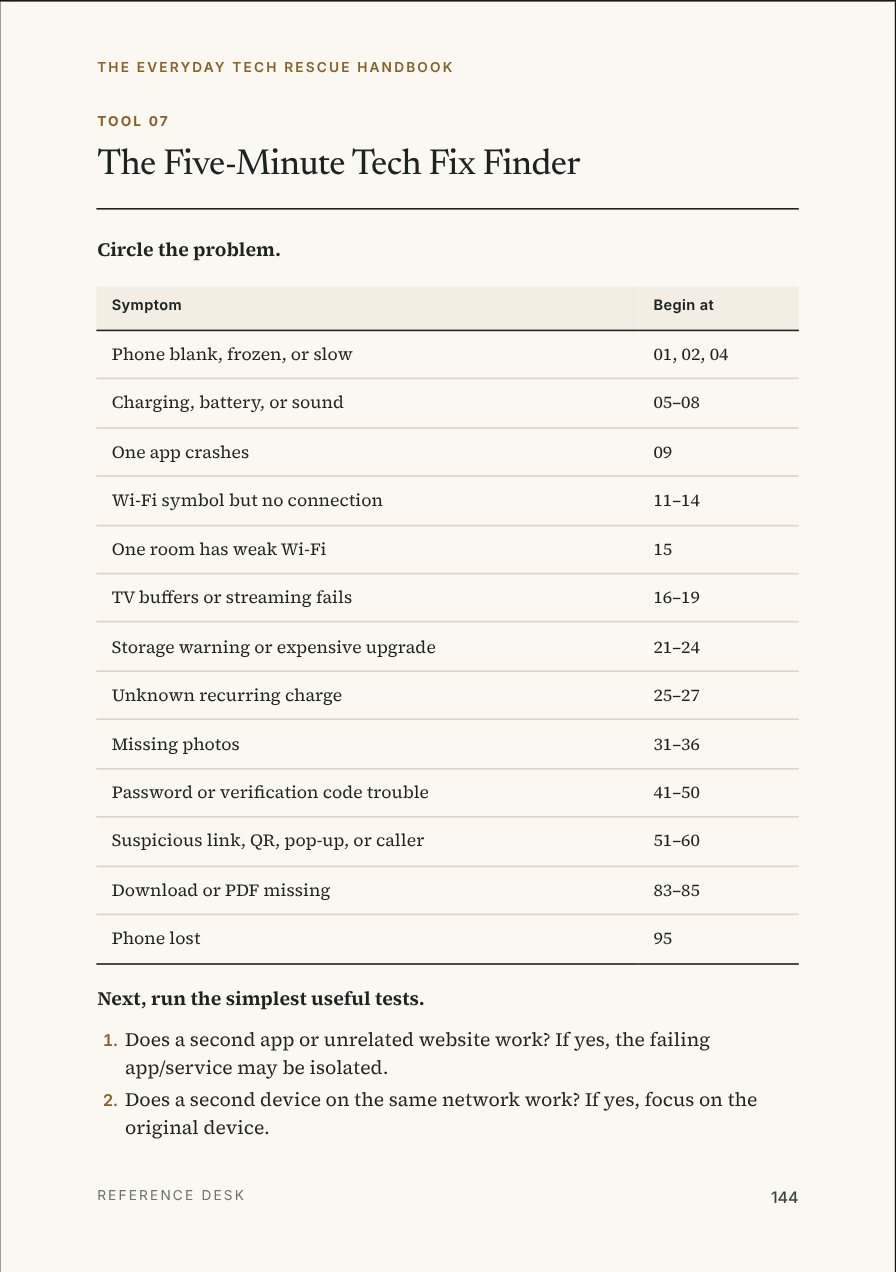
That means treating the photographs you cannot replace, the accounts you will need tomorrow, and the money you would rather not spend as priorities. The lessons are organized by everyday symptoms rather than technical vocabulary. Each solution aims to give you a useful first check, a way to test whether it worked, and a clear point where official or qualified help is the better decision.
Some answers are pleasingly small: make text larger, see which category fills the phone, or check whether a streaming problem affects one app or the whole connection. Others need more caution. The pre-deletion worksheet and backup map exist because the wrong cleanup can cause a lasting loss.
We do not expect you to memorize menus or become the family technician. We want you to have somewhere clear to turn when an ordinary task suddenly stops working. The 100 numbered solutions and seven printable worksheets are there for exactly that reason.
Start with the one problem in front of you. Keep the rest of the handbook for the next time you need it.
— Tech Without the Jargon